History and Culture A _ 2012-2013

A class blog Patricia Bou. English Studies. UV

Tuesday, 29 May 2012

Napalm Gas & Agent Orange (A chemical war)


NAPALM GAS & AGENT ORANGE IN THE VIETNAM WAR


1. Napalm Gas

Napalm is a flammable, gasoline-based weapon invented in 1942. The name is a composed word for naphthenic palmitic acid. Napalm is more concretely a powder that mixed with gasoline is a tactical weapon used to remove vegetation and produce clearances in places like forests or jungles.

A boat throwing gas Napalm

It was used by the U.S. during the Vietnam War. It produced horrific wounds and illnesses in the population. The aim to use this arm was that the Communist forces would have no place to hide and the USA Army could detect them easily in the areas without vegetation.

The victims of napalm did not experience immediately 1st degree burns, but after appeared wounds and skin cuts (its adhesive properties make impossible to remove it from the human skin), and there were secondary effects like more serious burns, loss of blood pressure, unconsciousness, and even death in a short time after the contamination.


 Effects of the gas over human bodies

The doctor Mr Le The, a specialist of the Democratic Republic of Vietnam annotated the steps that the victims suffered. The results are based on approximately 150 cases of napalm he examined and treated:

- First degree: outer skin only (usually very little affection)
- Second degree: the layer of the outer skin
- Third degree: the layer of the inner skin
- Fourth degree: the deepest hypodermic tissues
- Fifth degree: the muscles
- Sixth degree: the bones


 Napalm's burning effects

Frequently, when American military forces were becoming over-run in Vietnam, air help was called to help stabilize the situation with Napalm, as well as with other explosives.
International law prohibited the use of napalm or other incendiaries gases against civilian populations, and they were also banned by the United Nations Convention on Certain Conventional Weapons (CCW) in 1980. Protocol III of the CCW restricts the use of all incendiary weapons, but a number of states have not accepted these protocols.

2. Agent Orange
One major legacy of the Vietnam War that remains unresolved is the damage that Agent Orange, and its accompanying dioxin, have done to the people and the environment of Vietnam. For the last 30 years, this issue has generally been pushed to the background of bilateral discussions by other issues considered more important by the United States and/or Vietnam.
Michael F. Martin (2009)

Agent Orange is the common name used for one of the herbicides and defoliants that the USA Army spread as part of the warfare program, Operation Ranch Hand, it was used in the Vietnam War for ten years. Its name was given from the colour of the orange barrels in which it was shipped, and was the chemical product most widely used from the so-called "Rainbow Herbicides".

Aeroplanes spreading the Agent Orange

During the Vietnam War, U.S. troops sprayed nearly 75.700.000 litres of herbicides and defoliants in Vietnam, eastern Laos and parts of Cambodia. The goal was to defoliate rural/forested land, depriving guerrillas of food and clearing areas to establish base perimeters for the Army.
The Vietnamese who were exposed to the chemical have suffered from cancer, liver damage, pulmonary and heart diseases, defects in the reproductive capacity, and skin and nervous disorders. People exposed to it had severe physical deformities, mental and physical disabilities, and a shorter life. The forests and jungles in South Vietnam were completely devastated, without vegetation and perhaps they will need 200 years to grow back again.
It has been proved that the use of the Agent Orange in Vietnam was substantially underestimated and, furthermore, the concentration of dioxins in it was significantly higher than originally was thought. In historical terms, as proclaimed at a 2002 conference in Yale University, it was the “largest chemical warfare campaign in the history”. Kalen Iwamoto (2005)

The Agent Orange is the cause of some malformations

3. Testimonies

VICTIM: “The American airplanes came right toward me and dropped a strange mist in the jungle, and the next day, the trees were dead” he recalled. “We were scared. We were confused.” 

Vietnam society could do nothing under these chemical weapons

SOLDIER: If you served in Vietnam between 1962 and 1971, as I did, there is a pretty good chance that you were exposed to Agent Orange. The VA acknowledges that some 20 million gallons of herbicides were sprayed across South Vietnam in an attempt to destroy foliage used to conceal enemy forces and supply lines. Spraying was also intended to deny access to agricultural crops used by the enemy. Recently, I tried to determine exactly where all this spraying occurred. […] The chart I found looked like one of those modern artworks where the painter takes his material and throws it at the canvas. It covers the entire country from top to bottom.

Bibliography

http://www.youtube.com/watch?v=PyOmFfAYJxc&feature=related
http://bibliotecadigital.ilce.edu.mx/sites/ciencia/volumen1/ciencia2/51/htm/sec_12.html
http://en.wikipedia.org/wiki/Agent_Orange
http://omar660.tripod.com/id30.html
http://www.globalsecurity.org/military/systems/munitions/napalm.htm
http://en.wikipedia.org/wiki/Phan_Thi_Kim_Phuc
http://www.vietnow.com/pagesvaret/agent.htm
http://www.fas.org/sgp/crs/row/RL34761.pdf
http://www.globalresearch.ca/index.php?context=va&aid=13974
http://www.ipb.org/Agent%20Orange%20in%20Vietnam.pdf
http://vietnamreportingproject.org/2011/03/unfinished-business/

Labels: , ,

Wednesday, 28 March 2012

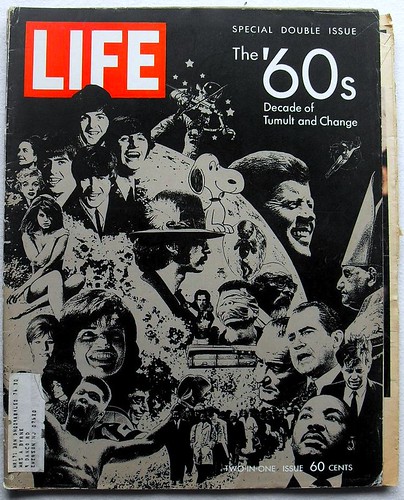
The 60's: A Decade of Tumult and Change

Labels: ,

Sunday, 26 February 2012

Martin Luther King: A Time to Break Silence

Group: Sara Peralta, Raul Gullón y Víctor J. Reyes


Speech delivered by Dr. Martin Luther King, Jr., on April 4, 1967, at a meeting of Clergy and Laity Concerned at Riverside Church in New York City.


Mr. Chairman, ladies and gentlemen:

I need not pause to say how very delighted I am to be here tonight, and how very delighted I am to see you expressing your concern about the issues that will be discussed tonight by turning out in such large numbers. I also want to say that I consider it a great honor to share this program with Dr. Bennett, Dr. Commager, and Rabbi Heschel, and some of the distinguished leaders and personalities of our nation. And of course it’s always good to come back to Riverside church. Over the last eight years, I have had the privilege of preaching here almost every year in that period, and it is always a rich and rewarding experience to come to this great church and this great pulpit.

I come to this magnificent house of worship tonight because my conscience leaves me no other choice. I join you in this meeting because I'm in deepest agreement with the aims and work of the organization which has brought us together: Clergy and Laymen Concerned About Vietnam. The recent statements of your executive committee are the sentiments of my own heart, and I found myself in full accord when I read its opening lines: "A time comes when silence is betrayal." And that time has come for us in relation to Vietnam.

The truth of these words is beyond doubt, but the mission to which they call us is a most difficult one. Even when pressed by the demands of inner truth, men do not easily assume the task of opposing their government's policy, especially in time of war. Nor does the human spirit move without great difficulty against all the apathy of conformist thought within one's own bosom and in the surrounding world. Moreover, when the issues at hand seem as perplexing as they often do in the case of this dreadful conflict, we are always on the verge of being mesmerized by uncertainty; but we must move on.

And some of us who have already begun to break the silence of the night have found that the calling to speak is often a vocation of agony, but we must speak. We must speak with all the humility that is appropriate to our limited vision, but we must speak. And we must rejoice as well, for surely this is the first time in our nation's history that a significant number of its
religious leaders have chosen to move beyond the prophesying of smooth patriotism to the high grounds of a firm dissent based upon the mandates of conscience and the reading of history. Perhaps a new spirit is rising among us. If it is, let us trace its movements and pray that our own inner being may be sensitive to its guidance, for we are deeply in need of a new way beyond the
darkness that seems so close around us.

Over the past two years, as I have moved to break the betrayal of my own silences and to speak from the burnings of my own heart, as I have called for radical departures from the destruction of Vietnam, many persons have questioned me about the wisdom of my path. At the heart of their concerns this query has often loomed large and loud: "Why are you speaking about the war, Dr. King?" "Why are you joining the voices of dissent?" "Peace and civil rights don't mix," they say. "Aren't you hurting the cause of your people," they ask? And when I hear them, though I often understand the source of their concern, I am nevertheless greatly saddened, for such questions mean that the inquirers have not really known me, my commitment or my calling. Indeed, their questions suggest that they do not know the world in which they live.

In the light of such tragic misunderstanding, I deem it of signal importance to try to state clearly, and I trust concisely, why I believe that the path from Dexter Avenue Baptist Church -- the church in Montgomery, Alabama, where I began my pastorate -- leads clearly to this sanctuary tonight.

I come to this platform tonight to make a passionate plea to my beloved nation. This speech is not addressed to Hanoi or to the National Liberation Front. It is not addressed to China or to Russia. Nor is it an attempt to overlook the ambiguity of the total situation and the need for a
collective solution to the tragedy of Vietnam. Neither is it an attempt to make North Vietnam or the National Liberation Front paragons of virtue, nor to overlook the role they must play in the successful resolution of the problem. While they both may have justifiable reasons to be suspicious of the good faith of the United States, life and history give eloquent testimony to the fact that conflicts are never resolved without trustful give and take on both sides.

Tonight, however, I wish not to speak with Hanoi and the National Liberation Front, but rather to my fellow Americans.

Since I am a preacher by calling, I suppose it is not surprising that I have seven major reasons for bringing Vietnam into the field of my moral vision. There is at the outset a very obvious and almost facile connection between the war in Vietnam and the struggle I, and others, have been waging in America. A few years ago there was a shining moment in that struggle. It seemed as if there was a real promise of hope for the poor -- both black and white -- through the poverty program. There were experiments, hopes, new beginnings. Then came the buildup in Vietnam, and I watched this program broken and eviscerated, as if it were some idle political plaything of a society gone mad on war, and I knew that America would never invest the necessary funds or energies in rehabilitation of its poor so long as adventures like Vietnam continued to draw men and skills and money like some demonic destructive suction tube. So, I was increasingly ompelled to see the war as an enemy of the poor and to attack it as such.

Perhaps a more tragic recognition of reality took place when it became clear to me that the war was doing far more than devastating the hopes of the poor at home. It was sending their sons and heir brothers and their husbands to fight and to die in extraordinarily high proportions relative to the rest of the population. We were taking the black young men who had been crippled by our society and sending them eight thousand miles away to guarantee liberties in Southeast Asia which they had not found in southwest Georgia and East Harlem. And so we have been repeatedly faced with the cruel irony of watching Negro and white boys on TV screens as they kill and die together for a nation that has been unable to seat them together in the same schools. And so we watch them in brutal solidarity burning the huts of a poor village, but we realize that they
would hardly live on the same block in Chicago. I could not be silent in the face of such cruel manipulation of the poor.

My third reason moves to an even deeper level of awareness, for it grows out of my experience in the ghettoes of the North over the last three years -- especially the last three summers. As I have walked among the desperate, rejected, and angry young men, I have told them that Molotov cocktails and rifles would not solve their problems. I have tried to offer them my deepest compassion while maintaining my conviction that social change comes most meaningfully through nonviolent action. But they ask -- and rightly so -- what about Vietnam? They ask if our own nation wasn't using massive doses of violence to solve its problems, to bring about the changes it wanted. Their questions hit home, and I knew that I could never again raise my voice against the violence of the oppressed in the ghettos without having first spoken clearly to the greatest purveyor of violence in the world today -- my own government. For the sake of those boys, for the sake of this government, for the sake of the hundreds of thousands trembling under our violence, I cannot be silent.

For those who ask the question, "Aren't you a civil rights leader?" and thereby mean to exclude me from the movement for peace, I have this further answer. In 1957 when a group of us formed the Southern Christian Leadership Conference, we chose as our motto: "To save the soul of America." We were convinced that we could not limit our vision to certain rights for black people, but instead affirmed the conviction that America would never be free or saved from itself until the descendants of its slaves were loosed completely from the shackles they still wear. In a way we were agreeing with Langston Hughes, that black bard of Harlem, who had written earlier:


O, yes,
I say it plain,
America never was America to me,
And yet I swear this oath --
America will be!
Now, it should be incandescently clear that no one who has any concern for the integrity and life of America today can ignore the present war. If America's soul becomes totally poisoned, part of the autopsy must read: Vietnam. It can never be saved so long as it destroys the deepest hopes of men the world over. So it is that those of us who are yet determined that America will be -- are -- are led down the path of protest and dissent, working for the health of our land.

As if the weight of such a commitment to the life and health of America were not enough, another burden of responsibility was placed upon me in 1954; and I cannot forget that the Nobel Peace Prize was also a commission, a commission to work harder than I had ever worked before for "the brotherhood of man." This is a calling that takes me beyond national allegiances, but even if it were not present I would yet have to live with the meaning of my commitment to the ministry of Jesus Christ. To me the relationship of this ministry to the making of peace is so obvious that I sometimes marvel at those who ask me why I'm speaking against the war. Could it be that they do not know that the good news was meant for all men -- for Communist and capitalist, for their children and ours, for black and for white, for revolutionary and conservative? Have they forgotten that my ministry is in obedience to the One who loved his enemies so fully that he died for them? What then can I say to the Vietcong or to Castro or to Mao as a faithful minister of this One? Can I threaten them with death or must I not share with them my life?

And finally, as I try to explain for you and for myself the road that leads from Montgomery to this place I would have offered all that was most valid if I simply said that I must be true to my conviction that I share with all men the calling to be a son of the living God. Beyond the calling of race or nation or creed is this vocation of sonship and brotherhood, and because I believe that the Father is deeply concerned especially for his suffering and helpless and outcast children, I come tonight to speak for them.

This I believe to be the privilege and the burden of all of us who deem ourselves bound by allegiances and loyalties which are broader and deeper than nationalism and which go beyond our nation's self-defined goals and positions. We are called to speak for the weak, for the voiceless, for the victims of our nation and for those it calls "enemy," for no document from human hands can make these humans any less our brothers.

And as I ponder the madness of Vietnam and search within myself for ways to understand and respond in compassion, my mind goes constantly to the people of that peninsula. I speak now not of the soldiers of each side, not of the ideologies of the Liberation Front, not of the junta in Saigon, but simply of the people who have been living under the curse of war for almost three
continuous decades now. I think of them, too, because it is clear to me that there will be no meaningful solution there until some attempt is made to know them and hear their broken cries.
They must see Americans as strange liberators. The Vietnamese people proclaimed their own independence in 1954 -- in 1945 rather -- after a combined French and Japanese occupation and before the communist revolution in China. They were led by Ho Chi Minh. Even though they
quoted the American Declaration of Independence in their own document of freedom, we refused to recognize them. Instead, we decided to support France in its reconquest of her former colony. Our government felt then that the Vietnamese people were not ready for independence, and we again fell victim to the deadly Western arrogance that has poisoned the international atmosphere for so long. With that tragic decision we rejected a revolutionary government seeking self-determination and a government that had been established not by China -- for whom the Vietnamese have no great love -- but by clearly indigenous forces that included some communists. For the peasants this new government meant real land reform, one of the most important needs in their lives.

For nine years following 1945 we denied the people of Vietnam the right of independence. For nine years we vigorously supported the French in their abortive effort to recolonize Vietnam. Before the end of the war we were meeting eighty percent of the French war costs. Even before the French were defeated at Dien Bien Phu, they began to despair of their reckless action, but we did not. We encouraged them with our huge financial and military supplies to continue the war even after they had lost the will. Soon we would be paying almost the full costs of this tragic attempt at recolonization.

After the French were defeated, it looked as if independence and land reform would come again through the Geneva Agreement. But instead there came the United States, determined that Ho should not unify the temporarily divided nation, and the peasants watched again as we supported one of the most vicious modern dictators, our chosen man, Premier Diem. The peasants watched and cringed as Diem ruthlessly rooted out all opposition, supported their extortionist landlords, and refused even to discuss reunification with the North. The peasants watched as all this was presided over by United States' influence and then by increasing numbers of United States troops who came to help quell the insurgency that Diem's methods had aroused. When Diem was overthrown they may have been happy, but the long line of military dictators seemed to offer no real change, especially in terms of their need for land and peace.

The only change came from America, as we increased our troop commitments in support of governments which were singularly corrupt, inept, and without popular support. All the while the people read our leaflets and received the regular promises of peace and democracy and land reform. Now they languish under our bombs and consider us, not their fellow Vietnamese, the real enemy. They move sadly and apathetically as we herd them off the land of their fathers
into concentration camps where minimal social needs are rarely met. They know they must move on or be destroyed by our bombs.

So they go, primarily women and children and the aged. They watch as we poison their water, as we kill a million acres of their crops. They must weep as the bulldozers roar through their areas preparing to destroy the precious trees. They wander into the hospitals with at least twenty casualties from American firepower for one Vietcong-inflicted injury. So far we may have killed a million of them, mostly children. They wander into the towns and see thousands of the children, homeless, without clothes, running in packs on the streets like animals. They see the children degraded by our soldiers as they beg for food. They see the children selling their sisters to our soldiers, soliciting for their mothers.
What do the peasants think as we ally ourselves with the landlords and as we refuse to put any action into our many words concerning land reform? What do they think as we test out our latest
weapons on them, just as the Germans tested out new medicine and new tortures in the concentration camps of Europe? Where are the roots of the independent Vietnam we claim to be building? Is it among these voiceless ones?

We have destroyed their two most cherished institutions: the family and the village. We have destroyed their land and their crops. We have cooperated in the crushing -- in the crushing of the nation's only non-Communist revolutionary political force, the unified Buddhist Church. We have supported the enemies of the peasants of Saigon. We have corrupted their women and
children and killed their men.

Now there is little left to build on, save bitterness. Soon, the only solid -- solid physical foundations remaining will be found at our military bases and in the concrete of the concentration camps we call "fortified hamlets." The peasants may well wonder if we plan to build our new Vietnam on such grounds as these. Could we blame them for such thoughts? We must speak for them and raise the questions they cannot raise. These, too, are our
brothers.

Perhaps a more difficult but no less necessary task is to speak for those who have been designated as our enemies. What of the National Liberation Front, that strangely anonymous group we call "VC" or "communists"? What must they think of the United States of America when they realize that we permitted the repression and cruelty of Diem, which helped to bring them into being as a resistance group in the South? What do they think of our condoning the violence which led to their own taking up of arms? How can they believe in our integrity when now we speak of "aggression from the North" as if there were nothing more essential to the war? How can they trust us when now we charge them with violence after the murderous reign of Diem and charge them with violence while we pour every new weapon of death into their land? Surely we must understand their feelings, even if we do not condone their actions. Surely we must see that the men we supported pressed them to their violence. Surely we must see that our own computerized plans of destruction simply dwarf their greatest acts.

How do they judge us when our officials know that their membership is less than twenty-five percent communist, and yet insist on giving them the blanket name? What must they be thinking when they know that we are aware of their control of major sections of Vietnam, and yet we appear ready to allow national elections in which this highly organized political parallel government will not have a part? They ask how we can speak of free elections when the Saigon press is censored and controlled by the military junta. And they are surely right to wonder what kind of new government we plan to help form without them, the only party in real touch with the peasants. They question our political goals and they deny the reality of a peace settlement from which they will be excluded. Their questions are frighteningly relevant. Is our nation planning to build on political myth again, and then shore it up upon the power of new violence?

Here is the true meaning and value of compassion and nonviolence, when it helps us to see the enemy's point of view, to hear his questions, to know his assessment of ourselves. For from his view we may indeed see the basic weaknesses of our own condition, and if we are mature, we may learn and grow and profit from the wisdom of the brothers who are called the opposition.

So, too, with Hanoi. In the North, where our bombs now pummel the land, and our mines endanger the waterways, we are met by a deep but understandable mistrust. To speak for them is to explain this lack of confidence in Western words, and especially their distrust of American intentions now. In Hanoi are the men who led the nation to independence against the Japanese and the French, the men who sought membership in the French Commonwealth and were betrayed by the weakness of Paris and the willfulness of the colonial armies. It was they who led a second struggle against French domination at tremendous costs, and then were persuaded to give up the land they controlled between the thirteenth and seventeenth parallel as a temporary measure at Geneva. After 1954 they watched us conspire with Diem to prevent elections which could have surely brought Ho Chi Minh to power over a united Vietnam, and they realized they had been betrayed again. When we ask why they do not leap to negotiate, these things
must be remembered.

Also, it must be clear that the leaders of Hanoi considered the presence of American troops in support of the Diem regime to have been the initial military breach of the Geneva Agreement concerning foreign troops. They remind us that they did not begin to send troops in large numbers and even supplies into the South until American forces had moved into the tens of
thousands.
Hanoi remembers how our leaders refused to tell us the truth about the earlier North Vietnamese overtures for peace, how the president claimed that none existed when they had clearly been made. Ho Chi Minh has watched as America has spoken of peace and built up its forces, and now he has surely heard the increasing international rumors of American plans for an invasion of the North. He knows the bombing and shelling and mining we are doing are part of traditional pre-invasion strategy. Perhaps only his sense of humor and of irony can save him when he hears the most powerful nation of the world speaking of aggression as it drops thousands of bombs on a poor, weak nation more than eight hundred -- rather, eight thousand miles away from its shores.

At this point I should make it clear that while I have tried in these last few minutes to give a voice to the voiceless in Vietnam and to understand the arguments of those who are called "enemy," I am as deeply concerned about our own troops there as anything else. For it occurs to me that what we are submitting them to in Vietnam is not simply the brutalizing process that goes on in any war where armies face each other and seek to destroy. We are adding cynicism to the process of death, for they must know after a short period there that none of the things we claim to be fighting for are really involved. Before long they must know that their government has sent them into a struggle among Vietnamese, and the more sophisticated surely realize that we are on the side of the wealthy, and the secure, while we create a hell for the poor.

Somehow this madness must cease. We must stop now. I speak as a child of God and brother to the suffering poor of Vietnam. I speak for those whose land is being laid waste, whose homes are being destroyed, whose culture is being subverted. I speak of the -- for the poor of America who are paying the double price of smashed hopes at home, and death and corruption in Vietnam. I speak as a citizen of the world, for the world as it stands aghast at the path we have taken. I speak as one who loves America, to the leaders of our own nation: The great initiative in this war is ours; the initiative to stop it must be ours.

This is the message of the great Buddhist leaders of Vietnam. Recently one of them wrote these words, and I quote:

Each day the war goes on the hatred increases in the heart of the Vietnamese and in the hearts of those of humanitarian instinct. The Americans are forcing even their friends into becoming their enemies. It is curious that the Americans, who calculate so carefully on the possibilities of military victory, do not realize that in the process they are incurring deep psychological and political defeat. The image of America will never again be the image of revolution, freedom, and democracy, but the image of violence and militarism.

If we continue, there will be no doubt in my mind and in the mind of the world that we have no honorable intentions in Vietnam. If we do not stop our war against the people of Vietnam immediately, the world will be left with no other alternative than to see this as some horrible, clumsy, and deadly game we have decided to play. The world now demands a maturity of America that we may not be able to achieve. It demands that we admit that we have been wrong from the beginning of our adventure in Vietnam, that we have been detrimental to the life of the Vietnamese people. The situation is one in which we must be ready to turn sharply from our present ways. In order to atone for our sins and errors in Vietnam, we should take the initiative in bringing a halt to this tragic war.

I would like to suggest five concrete things that our government should do [immediately] to begin the long and difficult process of extricating ourselves from this nightmarish conflict:

Number one: End all bombing in North and South Vietnam.
Number two: Declare a unilateral cease-fire in the hope that such action will create the atmosphere for negotiation.
Three: Take immediate steps to prevent other battlegrounds in Southeast Asia by curtailing our military buildup in Thailand and our interference in Laos.
Four: Realistically accept the fact that the National Liberation Front has substantial support in South Vietnam and must thereby play a role in any meaningful negotiations and any future Vietnam government.
Five: Set a date that we will remove all foreign troops from Vietnam in accordance with the 1954 Geneva Agreement.

Part of our ongoing -- Part of our ongoing commitment might well express itself in an offer to grant asylum to any Vietnamese who fears for his life under a new regime which included the Liberation Front. Then we must make what reparations we can for the damage we have done. We must provide the medical aid that is badly needed, making it available in this country, if necessary. Meanwhile -- Meanwhile, we in the churches and synagogues have a continuing task while we urge our government to disengage itself from a disgraceful commitment. We must continue to raise our voices and our lives if our nation persists in its perverse ways in Vietnam. We must be prepared to match actions with words by seeking out every creative method of protest possible.

As we counsel young men concerning military service, we must clarify for them our nation's role in Vietnam and challenge them with the alternative of conscientious objection. I am pleased to say that this is a path now chosen by more than seventy students at my own alma mater, Morehouse College, and I recommend it to all who find the American course in Vietnam a dishonorable and unjust one. Moreover, I would encourage all ministers of draft age to give up their ministerial exemptions and seek status as conscientious objectors. These are the times for real choices and not false ones. We are at the moment when our lives must be placed on the line if our nation is to survive its own folly. Every man of humane convictions must decide on the protest that best suits his convictions, but we must all protest.

Now there is something seductively tempting about stopping there and sending us all off on what in some circles has become a popular crusade against the war in Vietnam. I say we must enter that struggle, but I wish to go on now to say something even more disturbing.
The war in Vietnam is but a symptom of a far deeper malady within the American spirit, and if we ignore this obering reality...and if we ignore this sobering reality, we will find ourselves organizing "clergy and laymen concerned" committees for the next generation. They will be concerned about Guatemala -- Guatemala and Peru. They will be concerned about Thailand and Cambodia. They will be concerned about Mozambique and South Africa. We will be marching for these and a dozen other names and attending rallies without end, unless there is a significant and
profound change in American life and policy.

And so, such thoughts take us beyond Vietnam, but not beyond our calling as sons of the living God.

In 1957, a sensitive American official overseas said that it seemed to him that our nation was on the wrong side of a world revolution. During the past ten years, we have seen emerge a pattern of suppression which has now justified the presence of U.S. military advisors in Venezuela. This need to maintain social stability for our investments accounts for the counterrevolutionary action of American forces in Guatemala. It tells why American helicopters are being used against guerrillas in Cambodia and why American napalm and Green Beret forces have already been active against rebels in Peru.

It is with such activity in mind that the words of the late John F. Kennedy come back to haunt us. Five years ago he said, "Those who make peaceful revolution impossible will make violent revolution inevitable." Increasingly, by choice or by accident, this is the role our nation has taken, the role of those who make peaceful revolution impossible by refusing to give up the privileges and the pleasures that come from the immense profits of overseas investments. I am convinced that if we are to get on the right side of the world revolution, we as a nation must undergo a radical revolution of values. We must rapidly begin...we must rapidly begin the shift from a thing-oriented society to a person-oriented society. When machines and computers, profit motives and property rights, are considered more important than people, the giant triplets of racism, extreme materialism, and militarism are incapable of being conquered.

A true revolution of values will soon cause us to question the fairness and justice of many of our past and present policies. On the one hand, we are called to play the Good Samaritan on life's roadside, but that will be only an initial act. One day we must come to see that the whole Jericho Road must be transformed so that men and women will not be constantly beaten and robbed as they make their journey on life's highway. True compassion is more than flinging a coin to a beggar. It comes to see that an edifice which produces beggars needs restructuring.

A true revolution of values will soon look uneasily on the glaring contrast of poverty and wealth. With righteous indignation, it will look across the seas and see individual capitalists of the West investing huge sums of money in Asia, Africa, and South America, only to take the profits out with no concern for the social betterment of the countries, and say, "This is not just." It will look at our alliance with the landed gentry of South America and say, "This is not just." The Western arrogance of feeling that it has everything to teach others and nothing to learn from them is not just.

A true revolution of values will lay hand on the world order and say of war, "This way of settling differences is not just." This business of burning human beings with napalm, of filling our nation's homes with orphans and widows, of injecting poisonous drugs of hate into the veins of peoples normally humane, of sending men home from dark and bloody battlefields physically handicapped and psychologically deranged, cannot be reconciled with wisdom, justice, and love. A nation that continues year after year to spend more money on military defense than on programs of social uplift is approaching spiritual death.

America, the richest and most powerful nation in the world, can well lead the way in this revolution of values. There is nothing except a tragic death wish to prevent us from reordering our priorities so that the pursuit of peace will take precedence over the pursuit of war. There is nothing to keep us from molding a recalcitrant status quo with bruised hands until we have
fashioned it into a brotherhood.

This kind of positive revolution of values is our best defense against communism. War is not the answer. Communism will never be defeated by the use of atomic bombs or nuclear weapons. Let us not join those who shout war and, through their misguided passions, urge the United States to relinquish its participation in the United Nations. These are days which demand wise restraint and calm reasonableness. We must not engage in a negative anticommunism, but rather in a positive thrust for democracy, realizing that our greatest defense against communism is to take offensive action in behalf of justice. We must with positive action seek to remove those conditions of poverty, insecurity, and injustice, which are the fertile soil in which the seed of communism grows and develops.

These are revolutionary times. All over the globe men are revolting against old systems of exploitation and oppression, and out of the wounds of a frail world, new systems of justice and equality are being born. The shirtless and barefoot people of the land are rising up as never before. "The people who sat in darkness have seen a great light." We in the West must support these revolutions.

It is a sad fact that because of comfort, complacency, a morbid fear of communism, and our proneness to adjust to injustice, the Western nations that initiated so much of the revolutionary spirit of the modern world have now become the arch antirevolutionaries. This has driven many to feel that only Marxism has a revolutionary spirit. Therefore, communism is a judgment against our failure to make democracy real and follow through on the revolutions that we initiated. Our only hope today lies in our ability to recapture the revolutionary spirit and go out into a sometimes hostile world declaring eternal hostility to poverty, racism, and militarism. With this powerful commitment we shall boldly challenge the status quo and unjust mores, and thereby speed the day when "every valley shall be exalted, and every mountain and hill shall be made low, and the crooked shall be made straight, and the rough places plain."

A genuine revolution of values means in the final analysis that our loyalties must become ecumenical rather than sectional. Every nation must now develop an overriding loyalty to mankind as a whole in order to preserve the best in their individual societies.

This call for a worldwide fellowship that lifts neighborly concern beyond one's tribe, race, class, and nation is in reality a call for an all-embracing -- embracing and unconditional love for all mankind. This oft misunderstood, this oft misinterpreted concept, so readily dismissed by the Nietzsches of the world as a weak and cowardly force, has now become an absolute necessity for the survival of man. When I speak of love I am not speaking of some sentimental and weak response. I am not speaking of that force which is just emotional bosh. I am speaking of that force which all of the great religions have seen as the supreme unifying principle of life. Love is somehow the key that unlocks the door which leads to ultimate reality. This Hindu-Muslim-Christian-Jewish-Buddhist belief about ultimate -- ultimate reality is beautifully summed up in the first epistle of Saint John: "Let us love one another, for love is God. And every one that loveth is born of God and knoweth God. He that loveth not knoweth not God, for God is love." "If we love one another, God dwelleth in us and his love is perfected in us." Let us hope that this spirit will become the order of the day.

We can no longer afford to worship the god of hate or bow before the altar of retaliation. The oceans of history are made turbulent by the ever-rising tides of hate. And history is cluttered with the wreckage of nations and individuals that pursued this self-defeating path of hate. As Arnold Toynbee says:

Love is the ultimate force that makes for the saving choice of
life and good against the damning choice of death and evil. Therefore the first
hope in our inventory must be the hope that love is going to have the last
word.

We are now faced with the fact, my friends, that tomorrow is today. We are confronted with the fierce urgency of now. In this unfolding conundrum of life and history, there is such a thing as being too late. Procrastination is still the thief of time. Life often leaves us standing bare, naked, and dejected with a lost opportunity. The tide in the affairs of men does not remain at flood -- it ebbs. We may cry out desperately for time to pause in her passage, but time is adamant to every plea and rushes on. Over the bleached bones and jumbled residues of numerous civilizations are written the pathetic words, "Too late." There is an invisible book of life that faithfully records
our vigilance or our neglect. Omar Khayyam is right: "The moving finger writes, and having writ moves on."

We still have a choice today: nonviolent coexistence or violent coannihilation. We must move past indecision to action. We must find new ways to speak for peace in Vietnam and justice throughout the developing world, a world that borders on our doors. If we do not act, we shall surely be dragged down the long, dark, and shameful corridors of time reserved for those who possess power without compassion, might without morality, and strength without sight.
Now let us begin. Now let us rededicate ourselves to the long and bitter, but beautiful, struggle for a new world. This is the calling of the sons of God, and our brothers wait eagerly for our response. Shall we say the odds are too great? Shall we tell them the struggle is too hard? Will our message be that the forces of American life militate against their arrival as full men, and
we send our deepest regrets? Or will there be another message -- of longing, of hope, of solidarity with their yearnings, of commitment to their cause, whatever the cost? The choice is ours, and though we might prefer it otherwise, we must choose in this crucial moment of human history.
As that noble bard of yesterday, James Russell Lowell, eloquently stated:

Once to every man and nation comes a moment to decide,
In the strife of truth and Falsehood, for the good or evil side;
Some great cause, God’s new Messiah offering each the bloom or blight,
And the choice goes by forever ‘twixt that darkness and that light.
Though the cause of evil prosper, yet ‘tis truth alone is strong
Though her portions be the scaffold, and upon the throne be wrong
Yet that scaffold sways the future, and behind the dim unknown
Standeth God within the shadow, keeping watch above his own.

And if we will only make the right choice, we will be able to transform this pending cosmic elegy into a creative psalm of peace. If we will make the right choice, we will be able to transform the jangling discords of our world into a beautiful symphony of brotherhood. If we will but make the right choice, we will be able to speed up the day, all over America and all over the world, when "justice will roll down like waters, and righteousness like a mighty stream."

Labels: , , ,

Wednesday, 22 February 2012

Stokely Carmichael: Black Power Speech

Group members: Alicia Aparisi, Julia Valenzuela, Esther Gómez


The Audio of the video is divided in 7 parts.

1) http://www.youtube.com/watch?v=ET4OmJfY6T8

The transcript of the text is as follows:
(it will be edited for the presentation)


STOKELY CARMICHAEL, American Revolutionary

Stokely Carmichael's speech at the Oakland Auditorium February 17, 1968. The occasion was a benefit birthday party for Huey P. Newton, Minister of Defense of the Black Panther Party for Self-Defense.

Now then, tonight we have to talk about several things. We're here to celebrate brother Huey P. Newton's birthday. We're not here to celebrate it as Huey Newton the individual, but as Huey Newton parcel of black people wherever we are on the world today...today. And so, in talking about brother Huey Newton tonight, we have to talk about the struggle of black people, not only in the United States, but in the world today, and how he becomes part...how we move on so that our people will survive America.

Therefore, we are not talking about politics tonight, we're not talking about economics tonight; we are talking about the survival of a race of people--that is all that is at stake. We are talking about the survival of black people--nothing else...nothing else...nothing else. And you must understand that. Now why is it necessary for us to talk about the survival of our people? Many of us feel...many of our generation feel that they're getting ready to commit genocide against us. Now, many people say that's a horrible thing to say about anybody. But if it is a horrible thing to say, then we should do as brother Malcolm [Malcolm X] says: we should examine history. The birth of this nation was conceived in the genocide of the red man......genocide of the red man...of the red man. In order for this country to come about, the honky had to completely exterminate the red man, and HE DID IT! And he did it! He did it! And he did it where he does not even feel sorry, but he romanticizes it by putting it on television with cowboy and indians...cowboy and indians.


Then the question we must ask ourselves is, if he's capable of doing it to the red man, can he also do it to us? Let us examine history some more. People says it is a horrible thing to say that white people would really think about committing genocide against black people. Let us check our history out. [tape skip] ...that we built this country--nobody else. I'll explain that to you. When this country started, economically it was an agricultural country. The cash crop on the world market was cotton. WE PICKED THE COTTON! WE PICKED THE COTTON! We did! So it is we who built this country. It is we who have fought in the wars of this country. This country is becoming more and more technological, so that the need for black people is fastly disappearing. When the need for black people disappears, so will we, and he will consciously wipe up out. He will consciously wipe up out. Let us check World War II. He will not do it unto his own. Notice who he dropped an atomic bomb on: some helpless yellow people in Hiroshima. Some helpless yellow people in Hiroshima......in Hiroshima. If you do not think he's capable of committing genocide against us, check out what he's doing to our brothers in Vietnam! Check out what he's doing in Vietnam! We have to understand that we're talking about our survival and nothing else. Whether or not this beautiful race of people is going to survive on the earth, that's what we're talking about--nothing else ...nothing else. If you do not think he's capable of wiping us out, check out the white race: wherever they have gone, they have rule, conquered, murdered, and plagued. Whether they are the majority or the minority, they always rule!......they always rule! Always rule! And check out the pattern in which they move. And check out the pattern in which they move. They came to this country. They didn't know a damn [thing][tape skip]...The Red Man showed them how to adapt to this country: he showed them how to grow corn; he showed them how to hunt, and when the Indians finished showing it, he wiped them out! He wiped them out. He wiped them out. He was not satisfied. He went to South America. The Aztec Indians said, "This is our silver. This is our copper. These are our metals. These are statues. We built them for the beauty of our people." After the Indians showed it to him, he took it and he wiped them out! He wiped them out. He went to Africa. Our ancestors said, "Dig, this is our way of life. We beat drums. We enjoy ourselves. We have gold. We make diamonds and stuff for our women." He took the gold, he made us slaves, and today he RUNS Africa! Africa! He went to Asia. The Chinese showed him everything they had. They showed him gunpowder. They said, "We use this for fireworks on our anniversaries, on our days of festivities." He took it, he made it a gun, and he conquered China.


We are talking about a certain type of superiority complex that exists in the White Man wherever he is. And that's what we have to understand today. So that everything goes out the window, we talk about survival. That's all. They can cut all that junk about poverty program, education, housing, welfare...we talking about survival, and, brothers and sisters, WE gonna survive America! WE gonna survive America! WE gonna survive America!


Now then, we have to understand what is going on, not only in this country, but the world, especially in Africa. Because we are an African people, nothing else. We have ALWAYS been an African people. We have ALWAYS maintained our own value system, and I will prove that to you. As much as he has tried, our people have resisted for 413 years in this wilderness, and they resisted for this generation to carry out what must be done. We cannot fail our ancestors ...cannot fail our ancestors...cannot fail our ancestors. We resisted in every way you can point to. Take the English language. There are cats who come here from Italy, from Germany, from Poland, from France. In two generations they speak English perfectly. We have NEVER spoken English correctly! Never have we spoken English correctly. Never! Never! Never! And that is because our people consciously resisted a language that did not belong to us--never did, never will. Anyhow they try to run it down our throats, we ain't going to have it! We ain't going to have it! You must understand that as a level of resistance. Anybody can speak that simple honky's language correctly. Anybody can do it. We have not done it because we have resisted...resisted.


Check out our way of life. No matter how hard he's tried, we still maintain a communal way of life in our communities. We do not send old people to old peoples' homes; that's junk! That's junk! That's junk! That's junk! We do not call children illegitimate in our community. We take care of any child in our community... any child in our community. It is a level of resistance that we must begin to look for among our people. Pick up that thread and do what has to be done so that our people will survive. Three things. First and foremost: he has been able to make us hate each other. He has transplanted that hate and the love for each other for a love of his country...his country. We must begin to develop number one--and this is the most important thing we can do as a people--we must first develop and undying love for our people...our people. ...our people...our people. We must develop and undying love as is personified in brother Huey P. Newton. Undying love for our people......undying love. If we do not do that, we will be wiped out. We must develop and undying love for our people. Our slogan will become, "First our people, then, and only then me and you as individuals." Our people first...our people first. Following from that came secondly the slogan, "Every Negro is a potential black man; we will not alienate them!" ......we will not alienate them! ...we will not alienate them!


Understand the concept of "Negro" and the concept of "Black Man." We came to this country as black men and as Africans. It took us 400 years to become Negros. Understand that. That means that the concept of a black man is one who recognizes his cultural, his historical, and the roots of his great ancestors who were the greatest warriors on the face of this earth. Africans! Africans! Africans! Many of our people's mind have been white washed. If a Negro comes up to you and you turn your back on him, he's got to run to the honky. We're going to take time and patience with our people because they're OURS!...they're OURS! All of the Uncle Toms, we're going to sit down and we're going to talk. And when they slap, we're going to bow. And when they slap we're going to bow. And we're going to try to bring them home. And if they don't come home we're going to [tape skip] that's all...that's all...that's all.


We have to recognize who our major enemy is. The major enemy is not your brother, flesh of your flesh and blood of your blood. The major enemy is the honky and his institutions of racism. THAT's the major enemy! THAT is the major enemy! And whenever anybody prepares for revolutionary warfare, you concentrate on the major enemy. We're not strong enough to fight each other and also fight him. We WILL not fight each other today! We WILL not fight each other. There will BE no fights in the black community among black people. There will just be people who will be offed. There will be no fights, there will be no disruptions. We are going to be united!


Thirdly, and most importantly, we must understand that for black people, the question of community is not a question of geography, it is a question of color. It is a question of color. If you live in Watts, if you live in Harlem, Southside Chicago, Detroit, West Philadelphia, Georgia, Mississippi, Alabama. Wherever you go, the first place you go is to your people--not the land, to your people. For us the question of community is a question of color and our people, not geography! Not land! Not land! Not land! Not geography! That is to say that we break down the concept that black people living inside the United States are black Americans. That's nonesense! We got brothers in Africa. We got brothers in Cuba. We got brothers in Brazil. We got brothers in Latin America. We got brothers all over the world! All over the world! All over the world! And once we begin to understand that the concept of community is simply one of our people, it don't make a difference where we are. We are with our people and, therefore, we are home... ...therefore, we are home.


Now then, in speaking of survival it is necessary to understand the moves of one['s] enemies. The United States works on what call the "three M's": The missionaries, the money, and the Marines. That is precisely the way it has moved all over the world. It is the way it moves against us. They have sent the missionaries in; we sent them out. They have sent the money in with the poverty program. The Vietnamese and the Koreans are pulling the money out. The next thing comes the Marines...comes the marines. And if we're talking seriously, we get prepared [tape skip][to fight?] ...the marines. Now if some black people do not think that the white man is going to wipe us out completely, then it won't be no harm being prepared just in case he decides to do it..just in case he decides to do it. So there'll be no harm in us preparing ourselves for the marines. Now there's a lot of tactics we can learn. The VC [Viet Cong] are showing us the best way to get it done...best way to get it done. And don't be afraid to say it, tell em', "Yeah, you want the Vietnamese to defeat them, cause they wrong from the jump." Don't get up there and play games with them. You ever see them on TV?: "Well, actually, we were wrong going into Vietnam, but we can't get out unless we save face." To save [tape skip] honky's face, millions of Vietnamese got to die. That's a lot of junk. If you're wrong, say you're wrong and GET OUT! GET OUT! GET OUT! GET OUT!


We have to then go down the programs that they run through our throats and see how they relate to us. The first one is the vote. They got a new thing now: "Black Power is the vote." The vote in this country is, has been, and always will be irrelevant to the lives of black people! That is a fact. We survived in Mississippi, Alabama, Georgia, Louisiana, Texas, South Carolinia, North Carolinia, Virginia, and Washington, D.C. without the vote...without the vote. Last two years ago when Julian Bond was elected by black people in Georgia, they took him out to sea. There was no representation; the black people in Georgia are suviving today. They took Adam Clayton Powell out of office for a year and a half. Black people in Harlem are still surviving. That should teach you, the vote ain't nothin' but a honky's trick......nothin' but a honky's trick. If we talk about the vote today, we talk about it as one thing: an organizing tool to bring our people together...nothing else! ......nothing else...nothing else. It becomes a vehicle for organization; it cannot be anything else. To believe the vote is going to save you is to believe the way brother Adam Clayton Powell did. He's in Bimini now. That's what we have to understand.


The second thing they ram down our throat is this poverty program. And you have to understand the poverty program. It is designed to, number one, split the black community, and, number two, split the black family. There's no doubt about it splitting the black community. We know all of the people who started fighting over crumbs, 'cause that's all the poverty program is, the crumbs. If you leave the crumbs alone and organize, we could take the whole loaf, 'cause it belongs to us...belongs to us . But what happens is that the poverty program sends a couple of hundred thousand dollars into the community, and groups start setting up to fight over that money; so, automatically you've got splits in the community. Watts is the best example that we have today. It was the first one to get the poverty program after the rebellion, and today it is the most divided black community in the country... in the country. Second thing we have to recognize is what the poverty program does. In any race of people, the most instinctively revolutionary people is the youth. Because the youth is always willing to fight, in anybody's race...in anybody's race. And the poverty program is geared right at our youth. Right at our youth, to stop them from fighting. That's all the poverty program is: stop the rebellions--not take care of black people--stop the rebellions. How is it that you felt if you were a father and your son who you're supposed to be providing for comes home with ninety dollars a week, and you still unemployed. What is the poverty program doing to our fathers? What is it doing to our fathers? If they were concerned about the black community, if they believed the garbage they run down about the black family, they would give the jobs to our fathers, the breadwinners of the family, so we could have some respect for them......we could have some respect for them. But it is precisely because the poverty program is aimed at quelling our youth, that they do that. And all of the people who administer the poverty program won't even put their childrens in those programs that are supposed to be so good for us.


Let us move on to education. And we must talk very clearly about this concept of education. Franz Fanon says very clearly, "Education is nothing but the re-establishment and re-enforcement of values and institutions of a given society." All the brother's saying is that whatever this society says is right, when you go to school they going to tell you it's right, and you've got to run it on down. If you run it on down, you get an "A". If I say to you Columbus discovered American in 1492, if I was your teacher [and] you said, "No, Columbus didn't discover America in 1492, there were Indians here," I tell you you flunked the course. So education doesn't mean what they say it means. So now we must use education for our people and we must understand our communities. In our communities there are dope addicts; there are pimps; there are prostitutes; there [are] hustlers; there are teachers; there are maids; there are porters; there are preachers; there are gangsters. If I go to high school, I want to learn how to be a good maid, a good porter, a good hustler, a good pimp, a good prostitute, a good preacher, a good teacher, or a good porter. And education is supposed to prepare you to live in your community. That's what our community is like. If the educational system cannot do that, it must teach us HOW to change our community...how to change our community. It must do one or the other. The schools that we send our children to do not do one or the other. They do neither; they do something absolutely opposite. And when our youth, who are more intelligent than all those honkeys on those boards, drop out of that school cause they recognize it's not going to help them, then we turn around and yell at them, dividing our community again...dividing our community again. We have to understand that unless WE control the education system, where it begins to teach us how to change our community, where we live like human beings, no need to send anybody to school--that's just a natural fact. We have no alternative but to fight, whether we like it or not. On every level in this country, black people GOT to fight! Got to fight! Got to fight!


Now then let us move down and talk...[tape skip] concept. We have in our community black people, the masses and the bourgeoisie. That's about the level of breakdown. The bourgeoisie is very very minute inside our community. We have to bring them home. We have to bring them home for many reasons. We have to bring them home because they have technical skills which must be put for the benefit of their people, not for the benefit of this country, which is against their people. We've GOT to bring them home! We've got to bring them home. One of the ways of bringing our people home is by using patience, love, brotherhood, and unity, not force...not force. Love, patience, brotherhood, and unity. We try and we try and we try. If they become a treat, we off them. But we must begin to understand that in a concept of forming inside our community, a united front...a black united front, which engulfs every sector, every facet and every person inside our community working for the benefit of black people......working for the benefit of black people. And that is for each other's survival.


A lot of people in the bourgeoisie tell me they don't like Rap Brown when he says, "I'm going to burn the country down." But every time Rap Brown says, "I'm going to burn the country down," They get a poverty program......they get a poverty program. A lot of people say to me, "We don't like the Black Panthers for Self Defense walking around with guns." I tell you now, if the honkys in San Francisco take off the fighters who happen to represent the Black Panthers for Self Defense--ain't no body in this community prepared to fight right now--everybody gets offed, everybody gets offed

We need each other, we have to have each other for our survival. We got to have each other, from the revolutionaries to the conservatives - a black united front is what we're about, a black united front is what we're about. Now there's some people may not understand Brother Rap when he talks about whom we ally with. He says we have to ally with Mexican-Americans, Puerto Ricans, and the dispossessed people of the earth. He did not mention poor whites. We must understand that. I will not deny that poor whites in this country are oppressed. But there are two types of oppression. One is exploitation, the other is colonization. And we have to understand the difference between both of them. Exploitation is when you exploit somebody of your own race. Colonization is when you exploit somebody of a different race. We are colonized, they are exploited. They are exploited.

Now let us explain how the process of exploitation and colonization works. If I am black and I am exploiting you who are also black, we have the same values, the same culture, the same language, the same society, the same institutions, so I do not have to destroy those institutions for you. But if you are of another race, if you have a different culture, different language, different values, I have to destroy all of those who make you bow to me. And that is the difference between poor black and poor white. Poor whites have their culture, have their values, have their institutions, ours have been completely destroyed, completely destroyed, completely destroyed.

So when you talk about alliances you recognize you form alliances with people who are trying to rebuild their culture, trying to rebuild their history, trying to rebuild their dignity, people who are fighting for their humanity. Poor white people are not fighting for their humanity, they're fighting for more money. There are a lot of poor white people in this country, you ain't seen none of them rebel yet, have you? Why is it that black people are rebelling? Do you think it's because it's just poor jobs? Don't believe that junk the honky is running down. It's not poor jobs - it's a question of a people finding their culture, their nature and fighting for their humanity, for their humanity, for their humanity, for their humanity.

We have been so colonized that we are ashamed to say we hate, and that is the best example of a person who's colonized. You sit in your house, a honky walks in your house, beats you up, rapes your wife, beats up your child, and you don't have the humanity to say, "I hate you." You don't have it. That is how dehumanized we are. We are so dehumanized we cannot say "Yes, we hate you for what you have done to us." Can't say it, can't say it. And we are afraid to think beyond that point. Who do you think has more hatred pent up in them, white people for black people or black people for white people? White people for black people, obviously the hatred has been more. What have we done to them for them to build up this hatred? Absolutely nothing. Yet we don't even want to have the chance to hate them for what they've done to us. And if hate should be justified, we have the best justification of all for hating the honkies. We have it for hating the honkies, we have it, we have it. But we have been so dehumanized, we're like a dog which the master can throw out the house, which the master can spit on, and whenever he calls, the dog comes running back. We are human beings and we have emotions. We're fighting for our humanity, we're fighting for our humanity, and in regaining our humanity we recognize all the emotions that are in us. If you have love, you've got to have hate. You don't have one-sided emotions, that's a lot of junk. You always have two sides - hot, cold, white, black - everything goes - love, hate. 'Cause if you don't have hate, you cannot differentiate love, you cannot do it, you cannot do it.

Now then that brings us to the point of this thing about communism and socialism. Let's get to that, once and for all. Communism is not an ideology suited for black people, period. Period. Socialism is not an ideology fitted for black people, period. Period. And I will tell you why. And it must become crystal clear in our minds. Now we don't say that because the honkies call us communist, we don't care what they call us, it don't make a difference, don't make a difference. The ideologies of communism and socialism speak to class structure. They speak to people who oppress people from the top down to the bottom. We are not just facing exploitation. We are facing something much more important, because we are the victims of racism. Communism nor socialism does not speak to the problem of racism. And racism, for black people in this country, is far more important than exploitation. 'Cause no matter how much money you make in the black community, when you go into the white world you are still a nigger, you are still a nigger, you are still a nigger.

So that for us, the question of racism becomes uppermost in our minds. It becomes uppermost in our minds. How do we destroy those institutions that seek to keep us dehumanized? That is all we're talking about. On the question of exploitation, it comes second.

Now for white people who are communists, the question of communism comes first, because they're exploited by their other people. If you were exploited by other black people, then it would be a question of how we divide the profits. It is not that for us, it is not that for us. It is a question of how we regain our humanity and begin to live as a people - and we do not do that, because of the effects of racism in this country. We must therefore consciously strive for an ideology which deals with racism first, and if we do that we recognize the necessity of hooking up with the nine hundred million black people in the world today. That's what we recognize.

And if we recognize that, then it means that our political situation must become international. It cannot be national, it cannot be national, it must be international, must be international. It must be international because if we knew anything, we would recognize that the honkies don't just exploit us, they exploit the whole Third World - Asia, Africa, Latin America. They take advantage of Europe, but they don't colonize Europe, they colonize Asia, Africa, and Latin America. Understand that.

If we begin to understand that, then the problems America is heading for become uppermost in our minds. The first one they're heading for is the conflict in the Middle East. We must declare on whose side we stand. We can be for no one but the Arabs. There can be no doubt in our minds, no doubt in our minds, no doubt in our minds. We can be for no one but the Arabs because Israel belonged to the Arabs in 1917. The British gave it to a group of Zionists who went to Israel, ran the Palestinian Arabs out with terrorist groups, organized the state and did not get anywhere until Hitler came along and they swelled the state in 1948. That country belonged to the Palestinians. Not only that, they're moving to take over Egypt. Egypt is our motherland - it's in Africa.

We do not understand the concept of love. Here are a group of Zionists who come anywhere they want to and organize love and feeling for a place called Israel, which was created in 1948, where their youth are willing to go and fight for Israel. Egypt belongs to us four thousand years ago and we sit here supporting the Zionists. We got to be for the Arabs, period. Period.

That means that we also move with the rest of the Third World and understand exactly what is going on. It is no coincidence that the honky who stole a heart out of our brother and put it into another devil, was brought here on nationwide TV. Now for those of the older generation who say I may be harsh because I said the devil, let me give you a biblical quotation. It says, "Beware that the devil will come telling you that he can give you back life after death." If that's not what they doin', I don't know what is.

We have to understand that just today the United States voted for South Africa to come into the Olympics, and black people here are debating whether black athletes should be part of the Olympics. That is not a debate. The question is final. There can be no black athletes with any dignity participating in that white nonsense, that white nonsense, can't be no dignity, can't be no soul.

Now then we have to understand more and more as our people talk about survival. It means that when we talk about survival we organize politically, we organize consciously - that's what they call education, we call it black consciousness, 'cause that speaks to us, education speaks to them - we organize economically, and we organize militarily. Because if we don't do that, if you don't have a gun in your hand they can snatch the ballot from you. But if you got a gun, it's either them or us.

And the preparation of that fight on all struggles must become conscious among our people. We are ahead of the Jews, we know what they getting ready to do. They tell us every day in their Esquire magazines, they tell us on their televisions, they tell us with their 15,000 soldiers they're putting in the cities, they tell us with their tanks, they tell us with their Stoner guns, they tell us. We got to wake up and tell them we are going to get you back. Wipe out of your mind the questions of minority, wipe out of your mind the questions of technology, technology never decides a war. It is the will of a people that decides a war. It is the will of a people, the will of a people.

Wipe out of your mind the fact that we do not have guns. The Vietnamese didn't have it when they started, now they got American guns, American tanks, American everything, everything, everything, everything. If they come to get us they got to bring some to get some. We gonna take it - and the gun, and the gun, and the gun. And unless we raise our minds to the level of consciousness where we have an undying love for our people, where we're willing to shed our blood like Huey Newton did for our people, we will not survive, we will not survive.

Now there are many people who know that. All of the brothers sitting on the stage, all of the brothers around here, we all know that when something goes down, we are the first ones offed. There's no question in any of our minds. Only thing gonna stop us today is a bullet, and we spittin' 'em back, and we spittin' 'em back. But the question is not whether or not we can move, but how this entire black community moves for survival in a world that's clearly heading for a color clash. That is what we must ask ourselves, that is the only question. We can only do that by organizing our people and orienting them towards an African ideology which speaks to our blackness - nothing else.

It's not a question of right or left, it's a question of black. You dig where we coming from? We coming from a black thing, from a black thing, that's where we coming from. Because we can begin to pick up the threads of resistance that our ancestors laid down for us. And unless we begin to understand our people as a people, we will not do that, because they will split us and divide us. That means consciously we have to begin to organize our people! Organize our people! Organize our people! Organize our people! Organize our people! Nothing else! Organize our people, our people! We have no time for them; all our sweat, all our blood, even our life must go to our people, nothing else.

We have to understand this consciously. Our youth must be organized with a revolutionary perspectus. A revolutionary perspectus says that we're fighting a war of liberation. In order to fight a war of liberation, you need an ideology of nationalism. We do not have this country. The nationalism can be nothing but black nationalism. It is insane to think of anything else. Black nationalism has to begin to be our ideology. While blackness is necessary it is not sufficient, so we must move on, we move on then to consciously organize in our communities. And we recognize today while we're organizing: we do not have the money to feed our people, so there's no use to say "organize, we can get you a job." We can't get 'em, they control em, that is a fact. That isn't a reason for you to. sit down, it is only more the reason for you to fight, to think that you can't give your people a job. That's more of an inspiration to fight so you can give them a job rather than to sit down and say the honkies got us on every end. They are not God, they are not God. We are a beautiful race of people, we can do anything we want to do, all we got to do is get lip, get up, get up and do it, get up and do it, get up and do it, get up and do it.

Now then we have to discuss very cold the question of rebellions, It is a fact that they're prepared to meet rebellions anywhere in the cities. Now what's gonna happen if one of our brothers get offed? What happens if they go ahead and off Huey Newton? We must develop tactics where we do the maximum damage to them with minor damage to us. And when we move into that arena, that means that this black community must be organized. So if Huey Newton goes, and ten honky cops goes, won't a black man in this community get up and open his mouth, 'cause if he does, he goes too, he goes too, he goes too, he goes too. That means that in organizing for the maximum damage against them and minor damage against us, we must be consciously aware of the fact that there will be people in our community who are going around doing just that. In our community we seen nothing, we hear nothing, we know nothing. We see nothing, we hear nothing, we, knew nothing.

Now the question of agents is becoming a question where it's making us paranoid. we cannot become paranoid because what they can do is make you so afraid you won't move. So we're not gonna do that. We're gonna plan what we're gonna do. Little groups are gonna plan theirs, big groups are gonna plan theirs. If an agent is found, there is no question, he is gonna be offed in such a manner that any other black man who dares talk to the honky will have three thoughts before he even talks to a white man about reporting in our community.

Our people have demonstrated a willingness to fight. Our people have demonstrated the courage of our ancestors - to face tanks, guns, police dogs with bricks and bottles, that is a courageous act! We must understand that. And since our people have demonstrated a willingness to fight, the question is how can we organize that fight so we become the winners. So we become the winners. If a major rebellion were to break out, our people mayor may not become the losers, but if a small group was doing maximum damage, we remain on top. We remain on top. That is what we must understand, consciously understand it. It is not a question of what they might do, it is a question of how and when they're going to do it, that is all that's in their minds, That is all. For us the question is not going to Vietnam anymore, the question is how we can protect our brothers who do not go to Vietnam from going to jail. That's the only question we have to face in our community today. So that when one brother says "Hell, no," there's enough people in that community around him that if they dare come in, they gonna face maximum damage in their community.

We are talking about survival. We are talking about a people whose entire culture .. whose entire history, whose entire way of life have been destroyed. We're talking about a people who have produced in this year a generation of warriors who are going to restore to our people the humanity and the love that we have for each other. That's what we're talking about today, that's what we're talking about today. We are talking about becoming the executioners of our executioners. For example, you should give a lot of money to that defense fund, because while some of that money gonna go for that court thing, the rest of the money's gonna go for the executioners. So that if they execute Huey, the final execution rests in our hands, our hands, in our hands.

It is simply a question of a people. They control everything. They make us fight, they make us steal; they judge us, they put us in prison, they parole us, they send us out, they pick us up again - where in God's name do we exercise any sense of dignity in this country? Where? Where? Where? Where? What in God's name do we control, except the church, whose ideology is based to be compatible with the system which is against us? Where in God's name do we exercise any control as a people whose ancestors were the proudest people that walked the face of this earth? Where? Where?

Where, do I ask you, where? Everywhere he's gone he controls our people; in South Africa he steals the gold from our people, in the West Indies he steals the materials from our people, in South America where he's scattered our people, he's raping us blind, in America he rapes us, in Nova Scotia [sic] he rapes us. Where in God's name are we gonna find a piece of earth that belongs to us so we can restore our humanity? Where are we gonna find it unless this generation begins to organize to fight for it? To fight for it, to fight for it. Where?

And if this generation begins to fight, there can be no disruptive elements in our community. There can be none - we will tolerate none. There will be no disruptions . Anyone who fights for their people, we put our life on the line for them. Huey Newton fought for our people. Whether or not Huey Newton becomes free depends upon black people, nobody else, nobody else. Other people may help, but the final decision of brother Huey depends upon us. He didn't lay down his life for other people, he laid it down for us. For us. And if he did that, we must be willing to do the same, not only for him but for the generation that's going to follow us.

Consciously we must understand we're about organizing every element in our community. That work must begin. People must be willing to give money to an organizer who is willing to spend 24 hours a day organizing. He cannot organize from the poverty program because they tell him what to do. But if black people are giving him the money, he can do anything for the benefit of black their people. We have to run all the exploiters people, of black people. That means that people have to consciously give money for out of our community, by any means necessary, by any means necessary.

You ask yourself, if you were white, why would you want to be a cop in a black ghetto today when you know they looking for you? Why, if you weren't sick in the mind and felt you were so superior that you had the right to rule, why would you want a lousy five thousand dollar a year job when you white and you can make it in this society, why would you want the job as a cop if you weren't sick, tell me? Would you want to be in their community if they were ready to off you, for four thousand, five thousand, six thousand dollars a year? We have to understand the politics of those honkies in our community. They are there to patrol and to control. That is all. We are going to do the patrolling, we are going to do the controlling. We are building a concept of peoplehood. We do not care about honkies; but if hi. building that concept of peoplehood, the honkies get in our wav, they got to go. There is no question about it, there is no question about it. We are not concerned with their way of life, we are concerned with our people. We want to give our people the dignity and the humanity that we know as our people, and if they get in our way, they gonna be offed. They gonna be offed. We're not concerned with their system. Let them have it. We want our wav of life, and we're gonna get it. We're gonna get it or nobody's gonna have any peace on this earth. No peace on this earth.

Now then finally before I sit down, let me say two things. I want to read a statement that brother Huey P. Newton wrote yesterday when I saw him in jail. You have to understand the statement. He says: "As the racist police escalate the war in our communities against black people, we reserve the right to self-defense and maximum retaliation."

All of the things we spoke about tonight centered around brother Huey P. Newton because all of the things we spoke about tonight exemplify what he was trying to do. Now we have to understand something. There is no need for us to go to jail today for what we say. They did that to brother Malcolm X, they just offed him for what he was saying. We have to progress as a race. Brother Huey mayor may not have wiped out that honky, but at least it shows a progression, at least we're not getting offed for what we say, we're trying to get offed for what we do. Understand this concept: when they offed brother Malcolm, we did nothing; if they off brother Huey, we got to retaliate, we got to retaliate, we got to retaliate, we got to retaliate l Do you think that any other race of people will let them off somebody, and the rest of them sit there? Where in God's name would you find a race of people like that?

We have lost in the last five years some of our best leaders - Lumumba, Malcolm X, they offed brother Kwame Nkrumah, and we do nothing, we do nothing, we do nothing. While they offing our leaders, they take our youth and send them to Vietnam, send them to Korea. We are slowly getting wiped out. We must retaliate, we must fight for our humanity. It is our humanity that is at stake. It is not a question of dollars and cents. We gonna survive, because we have survived what they couldn't survive - that's natural-born fact. We have survived. We survived through slavery, we survived through their jive reconstruction, we survived through World War I, we survived through the Depression, we survived through World War II, we survived after World War II when they threw us out of the jobs in the North, we survived their Korean War, we gonna survive, we gonna survive, ain't no doubt about that in my mind, no doubt at all.

Our problem is to develop an undying love for our people, an undying love for our people. We must be willing to give our talents, our sweat, our blood, even our life for our people. Nothing else! Not this country - our people!

We must develop the concept that every Negro is a potential black man. You do not alienate your potential allies. Let's bring our people home. Let's bring our people home.

We must understand the concept that for us the question of community is not geography, it is , question of us - black people - wherever we are, SO we have to consciously become a part of the nine hundred million black people that are separated over this world. We were separated by them. We are blood of the same blood and flesh of the same flesh. We do not know who is our sister, who is our brother, or where we came from. They took us from Africa and they put thousands of miles of water between us, but they forgot - blood is thicker than water. We coming together, we coming together. Blood is thicker than water, blood is thicker than water.

We are an African people with an African ideology, we are wandering in the United States, we are going to build a concept of peoplehood in this country or there will be no country. Or there will be no country.

As I end, brothers and sister, brother Huey Newton belongs to us. He is flesh of our flesh, he is blood of our blood. He may be Mrs. Newton's baby, he's our brother. He's our brother. We do not have to talk about what we're going to do if we're consciously preparing and consciously willing to back those who prepare. All we say: brother Huey will be set free - or else.

Labels: , ,